
Running a small business blends excitement with responsibility. Entrepreneurs must prioritize growth and customer satisfaction while recognizing and managing the various risks that can jeopardize their success. From cyber threats to compliance challenges, every business owner should proactively seek ways to protect their enterprise and enable it to thrive. One significant step is understanding coverage through business insurance policies, which can provide a vital safety net when the unexpected occurs.
Overlooking risk management can lead to severe consequences. Disasters, legal troubles, and technology breaches can disrupt operations and cause lasting damage. Ensuring your small business is well-prepared with strong plans and appropriate insurance coverage is crucial to long-term stability and peace of mind. Common risks for small businesses include financial instability, compliance pitfalls, and external shocks like natural disasters. These challenges can arrive with little warning, making it important to develop comprehensive strategies and invest in safeguards. The goal is not just survival but building resilience so your business can continue to serve customers and grow. Small business protection demands a dual focus on prevention and response. You must identify potential issues before they materialize and create action plans to minimize their impact. Combining modern cybersecurity tools with on-the-ground emergency preparedness will help you adapt, recover, and remain competitive even in a rapidly changing market.
Common Risks Faced by Small Businesses
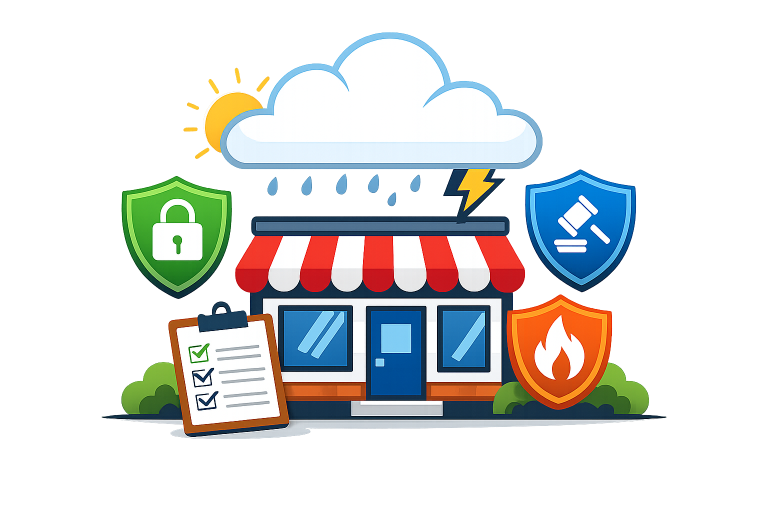
Every small business, regardless of size or industry, faces a mix of risks that can threaten day-to-day operations or even business survival. The most prevalent risks include:
- Cybersecurity Threats: Incidents such as data breaches, phishing scams, and ransomware attacks.
- Natural Disasters: Floods, earthquakes, wildfires, and hurricanes can incapacitate a business without warning.
- Legal Compliance: Failure to keep up with laws, regulations, and required documentation increases the risk of lawsuits and fines.
- Financial Challenges: Cash flow imbalances, economic downturns, or unexpected expenses can weaken your business foundation.
Cybersecurity Threats
With technology woven into nearly every aspect of business, cyber attacks have become a central concern for small business owners. Research from the Identity Theft Resource Center shows 81 percent of small enterprises faced a data or security breach in the past year, up from 73 percent previously.
Common cyber threats include:
- Phishing: Fraudulent communications, often emails, that try to trick staff into revealing passwords or sensitive data.
- Ransomware: Malicious software that locks business files and demands payment for their release.
- Data Breaches: Unauthorized access to confidential employee or customer information.
Investment in cybersecurity protocols, regular employee training, and scheduled security assessments are among the best defenses available for small businesses. Additionally, using strong passwords and keeping systems up to date helps reduce vulnerabilities.
Beyond these technical measures, fostering a security-conscious culture within your organization is fundamental. Encourage employees to report suspicious activities and periodically review access privileges to confidential information. Publicizing your cybersecurity policy, rewarding employees who prevent threats, and scheduling simulated phishing exercises can significantly improve overall security awareness and reduce the risk of human error.
Natural Disasters and Emergencies
Severe weather, fires, and unforeseen disasters can devastate small businesses. These events often damage property, disrupt services, and cause lasting financial hardship. To minimize potential losses, each business should have a disaster preparedness plan. This includes maintaining digital backups of important documents, obtaining property insurance, and developing a process for communicating with employees and customers during emergencies. Don’t overlook the importance of testing your disaster plan regularly and updating it after significant events or changes in your company’s structure. Establishing relationships with local emergency services, suppliers, and neighboring businesses can speed recovery after an adverse event. Training employees for emergency response can save lives and reduce downtime.
Legal and Regulatory Compliance
Failing to comply with evolving regulations can result in penalties or lawsuits that damage reputation and finances. According to Nationwide research, 78 percent of midsize business owners recognize the impact of shifting regulations on their risk management efforts. To remain compliant, small business owners should regularly review their industry’s legal requirements, maintain clear records, and invest in staff training. Consulting with legal professionals who specialize in your industry is also a smart preventive measure. As laws and regulations change frequently, designating a compliance officer or point of contact within your business can be a practical way to stay up to date. Subscription to regulatory alerts, industry association updates, or local chamber of commerce newsletters can further help you avoid costly legal missteps and adapt to new requirements effectively.
Financial Risks
Financial instability commonly stems from weak cash flow, unanticipated expenses, or changes in the economic environment. Many small businesses struggle to absorb financial shocks, making it imperative to implement strong fiscal management practices. Keeping track of income and expenses, maintaining an emergency fund, and diversifying revenue streams are effective steps to strengthen financial resilience. Consider working with a financial advisor to develop realistic forecasts, budget targets, and financial performance indicators. Leveraging accounting software can help analyze historic trends, automate invoicing, and catch discrepancies faster. Small business owners should schedule periodic financial reviews to adjust strategies and ensure they can meet obligations even during periods of reduced revenue.
Strategies to Mitigate Risks
- Develop a Comprehensive Risk Management Plan: Identify potential risks in all areas of your business and outline strategies to address them.
- Invest in Cybersecurity: Secure your technology infrastructure, train employees, and install the latest security software to defend against cyber threats.
- Obtain Adequate Insurance Coverage: Consider policies that protect against property damage, liability, cyber incidents, and business interruption.
- Keep Up with Legal Requirements: Stay updated on changes in local, state, and federal laws affecting your business and train your staff accordingly.
- Strengthen Financial Health: Monitor your cash flow, control costs, and seek professional advice to ensure you have a financial buffer for unexpected events.
Risk mitigation also involves embracing a culture of continuous improvement. Solicit feedback from employees regarding safety practices or process gaps, and encourage innovation in problem-solving. Engaging regularly with your peer network or business mentors can provide new perspectives and valuable insight into emerging risks and solutions that might otherwise go unnoticed.
Conclusion
Protecting your small business means proactively identifying risks and preparing strategies to handle them. By implementing comprehensive risk management, investing in protective measures, and staying informed about compliance and financial best practices, you can shield your business from many everyday risks. Strive to create a resilient foundation so your business can navigate uncertainty and continue to grow in any environment.